-
 1 × $10.00
Subtotal $10.00

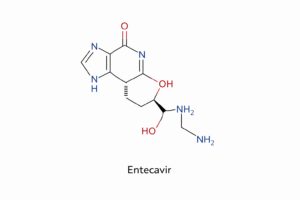
Entecavir is a nucleoside analogue reverse transcriptase inhibitor used to treat chronic hepatitis B infection in adults and children. It blocks hepatitis B virus DNA polymerase at multiple stages of viral replication, reducing viral load and liver inflammation. Since FDA approval in 2005, it has become a primary first-line treatment option.
Entecavir is a nucleoside analogue reverse transcriptase inhibitor. It is used to treat chronic hepatitis B virus infection in adults and children. It belongs to the same drug category as lamivudine and telbivudine. These all compounds that target viral replication at the DNA synthesis stage. Entecavir received regulatory approval in 2005. Since then it has become one of the primary first-line compounds in chronic hepatitis B management.
Entecavir targets hepatitis B virus DNA polymerase. That is the enzyme the virus uses to copy its genetic material inside liver cells. After absorption, the body converts entecavir into its active phosphorylated form through a series of cellular steps. That active form then competes with a natural nucleoside called deoxyguanosine triphosphate for access to the viral DNA polymerase enzyme.
The compound interferes with three distinct stages of viral replication. It blocks the priming stage, where the polymerase first attaches to the viral RNA template. It also blocks reverse transcription. The step where the virus converts its RNA into DNA. Then it blocks synthesis of the positive-strand DNA that completes the viral genome. Three separate blocks on one enzyme is significant.
Because hepatitis B virus uses a reverse transcriptase mechanism to replicate, blocking the polymerase at multiple points dramatically reduces new virus produced in infected liver cells. Lower viral load reduces ongoing liver inflammation. Over time, this slows the liver damage associated with chronic hepatitis B.
Entecavir is used for chronic hepatitis B infection. This includes both nucleoside-naïve patients and patients with lamivudine-resistant virus strains, though it performs differently in each group. In nucleoside-naïve patients. Those who have not previously taken antiviral treatment. Entecavir achieves high rates of viral suppression. It is one of the most potent compounds available in this category.
It is used in patients with hepatitis B e-antigen positive disease and hepatitis B e-antigen negative disease. Both forms involve active viral replication with potential for liver damage. Entecavir covers both conditions effectively at standard dosing.
The compound is also used in patients with HIV and hepatitis B co-infection, when a complete HIV treatment regimen is already in place. Entecavir alone is not sufficient for HIV. Co-infected patients require full antiretroviral coverage alongside it.
The nucleoside analogue reverse transcriptase inhibitor class includes several compounds used for chronic hepatitis B. Entecavir, tenofovir disoproxil fumarate, and lamivudine are the three most commonly referenced in treatment guidelines.
Lamivudine was one of the earliest compounds in this class. Resistance develops in a significant proportion of lamivudine-treated patients within the first few years. This is a well-documented characteristic of the compound. Entecavir has a much lower resistance profile in treatment-naïve patients, with resistance rates below one percent over five years. The gap in resistance performance is substantial.
Both compounds are considered high-barrier-to-resistance options. Tenofovir is a nucleotide analogue. There is a small structural distinction. Being earlier used for HIV treatment before its adoption in hepatitis B. The two compounds show comparable viral suppression rates in head-to-head studies. Tenofovir has a stronger signal for renal and bone mineral density effects over long-term use. Entecavir carries less renal concern at standard doses. This may influence selection in patients with pre-existing kidney function issues.
Brand Names and Generic Entecavir
Entecavir is available under the brand name Baraclude, which was the original formulation developed during clinical trials. It comes as a tablet and as an oral solution.
Generic entecavir is now produced by multiple manufacturers and is widely available. Generic forms carry the same active compound at equivalent strengths. Standard strengths are 0.5 mg for treatment-naïve patients and 1 mg for lamivudine-refractory or decompensated liver disease cases.
Get HIV Treatment carries entecavir for patients who order online. Specific brand and generic product pages are linked below this article.
Entecavir doThe most commonly reported effects across clinical trial populations include headache, fatigue, dizziness, and nausea. Each occurs in a small percentage of patients. These are typical of the nucleoside analogue class.
The more clinically significant characteristic of this class is the risk of lactic acidosis. This is a rare but serious metabolic effect linked to mitochondrial toxicity. The mechanism involves the compound’s interference with mitochondrial DNA polymerase gamma, an enzyme separate from the viral target. Lactic acidosis carries a serious risk signal. Symptoms including rapid breathing, muscle weakness, and abdominal pain.
Hepatic flares after stopping the drug are another compound-level characteristic. When antiviral treatment is stopped abruptly, viral replication can rebound rapidly and sometimes trigger severe hepatitis. This is not unique to entecavir. It is a class-wide effect seen across nucleoside analogue reverse transcriptase inhibitors used in chronic hepatitis B.
Entecavir has not shown the degree of renal tubular toxicity associated with tenofovir at standard doses. Serum creatinine elevation has been observed but is less pronounced in published data.
Entecavir has a relatively limited interaction profile compared to many antiviral compounds. It is not metabolised by the cytochrome P450 enzyme system. This removes a major source of drug-drug interactions seen with protease inhibitors and non-nucleoside reverse transcriptase inhibitors.
Compounds that reduce kidney function can affect entecavir clearance, since the compound is primarily eliminated by the kidneys. Nephrotoxic agents, including non-steroidal anti-inflammatory drugs, aminoglycoside antibiotics, and calcineurin inhibitors used in transplant patients. It may alter plasma concentrations through reduced renal clearance when used alongside entecavir.
In patients co-infected with HIV who are not on full antiretroviral treatment, entecavir alone carries a risk of selecting for the M184V mutation in HIV reverse transcriptase. This mutation reduces the effectiveness of emtricitabine and lamivudine in future HIV regimens.
Food has a modest effect on absorption. A high-fat meal can reduce peak concentration and overall exposure. This is a documented characteristic of the compound, not a minor detail.
Chronic hepatitis B can progress to cirrhosis and hepatocellular carcinoma. Long-term viral suppression is what slows that progression. Entecavir is one of the compounds used to achieve that suppression.
Specific brand and generic products containing entecavir are listed on the product pages below this article. These include standard tablet forms at both available strengths. Speak to a doctor before starting or switching antiviral treatment for chronic hepatitis B.