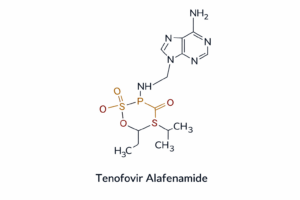
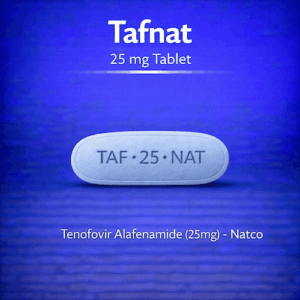
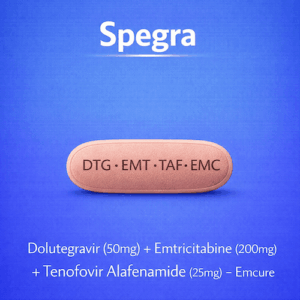
What is Tenofovir Alafenamide tablet?
Tenofovir Alafenamide tablet is an antiretroviral medication with the active ingredient tenofovir alafenamide (TAF). It belongs to a drug class called nucleotide reverse transcriptase inhibitors, or NRTIs. This medication helps manage HIV infection by reducing virus in the bloodstream.
TAF works at the cellular level to block HIV replication. It is typically prescribed as part of combination therapy. Other antiretroviral drugs must be taken alongside it. The tablet form makes it simple to take by mouth once daily with or without food.
What is Tenofovir Alafenamide tablet used for?
This medication is used to treat HIV-1 infection in adults and adolescents. HIV gradually damages the immune system by attacking CD4+ T cells. These are white blood cells that fight infection.
Over time, a weakened immune system allows opportunistic infections to develop. Tenofovir Alafenamide tablet helps slow or stop this process. It prevents the virus from multiplying. It is never used alone but always combined with at least two other antiretroviral medications.
The goal is to reduce the viral load to an undetectable level. This protects your immune system. It also helps prevent transmission to others.
How does Tenofovir Alafenamide work?
The active ingredient Tenofovir Alafenamide enters HIV-infected cells. Cellular enzymes convert it into its active form. Once active, it blocks reverse transcriptase.
This enzyme is critical for HIV to copy its genetic material. It creates new virus particles. By stopping reverse transcriptase, Tenofovir Alafenamide prevents the virus from reproducing inside your cells.
Without new virus production, the existing viral load decreases over time. Your immune system gets a chance to recover. CD4+ cell counts start to restore.
Most patients notice improved CD4 counts within weeks of starting combination therapy. The medication must be taken consistently every day to maintain viral suppression.
In what strengths is Tenofovir Alafenamide tablet available?
Tenofovir Alafenamide tablet is commonly available in 25 mg strength. Some formulations combine Tenofovir Alafenamide (TAF) with other antiretroviral drugs in single fixed-dose combinations. Your doctor will prescribe the strength and combination best suited to your resistance profile. Your medical history matters too.
Never adjust your strength without consulting your healthcare provider. Different combinations exist to simplify dosing schedules. Better adherence means better results.
How to take Tenofovir Alafenamide tablet and dosage steps
Take one 25 mg Tenofovir Alafenamide tablet by mouth once daily. Take it as directed by your doctor. The tablet can be swallowed whole with water. Food is not required for absorption.
Taking it at the same time each day helps maintain consistent blood levels. Set a daily alarm or use a pill organizer. This helps avoid missed doses.
If you miss a dose, take it as soon as you remember. Skip it if almost time for your next dose. Never take a double dose. Consistency matters most with antiretroviral therapy.
Missing doses increases the risk of viral resistance developing. Resistance makes the drug less effective.
What are the side effects of Tenofovir Alafenamide tablet?
The most commonly reported side effects include headache, nausea, diarrhea, and fatigue. Headache occurs in some patients as the body adjusts during the first few weeks. Nausea happens because TAF can irritate the gastrointestinal lining. It typically improves over time.
Taking the tablet with a small snack may reduce stomach upset.
More serious but less common side effects include changes in kidney function. Bone density can also change. TAF is actually designed to reduce kidney strain compared to earlier formulations.
However, kidney function should be monitored through regular blood tests. This should happen before starting and during treatment. Bone density loss can occur with prolonged antiretroviral use. Your doctor may recommend calcium and vitamin D supplementation.
Seek emergency medical attention if you experience severe allergic reaction symptoms. Difficulty breathing or facial swelling require immediate care.
Who should not take Tenofovir Alafenamide tablet?
Do not take this medication if you are allergic to tenofovir alafenamide. Allergies to any inactive ingredients also matter. Tenofovir Alafenamide is not recommended during pregnancy. First consult your doctor about your pregnancy status.
Discuss your pregnancy status with your healthcare provider before starting treatment. Breastfeeding while taking this medication requires medical guidance. TAF passes into breast milk.
Caution is needed if you have kidney disease. TAF requires renal filtration. Patients with hepatitis B virus (HBV) coinfection need special monitoring. Stopping this medication can trigger severe HBV flares.
Pre-existing bone disease may worsen with antiretroviral therapy. Always disclose your complete medical history to your prescribing physician.
What is the price of Tenofovir Alafenamide tablet?
GetHIVTreatment stocks Tenofovir Alafenamide 25 mg tablet at $8.50 per tablet. Prices may vary depending on quantity purchased. Insurance coverage also affects your cost.
Most health insurance plans provide coverage for antiretroviral medications. Ask your pharmacist about patient assistance programs if cost is a concern.
What are the alternatives to Tenofovir Alafenamide tablet?
Other nucleotide reverse transcriptase inhibitors include tenofovir disoproxil fumarate (TDF). This is an older formulation of tenofovir. TAF is preferred over TDF in modern treatment guidelines. It reaches therapeutic levels at lower doses.
Abacavir and lamivudine are alternative NRTIs. They belong to the same drug class. However, these cannot be used interchangeably without resistance testing.
Different antiretroviral drug classes offer alternative mechanisms. Integrase inhibitors, protease inhibitors, and non-nucleoside reverse transcriptase inhibitors each work differently. Your HIV specialist will recommend the best combination. Resistance testing results guide the decision. Individual health factors matter too.
No single alternative replaces Tenofovir Alafenamide tablet. Treatment always requires multiple drugs working together.

 1 × $20.00