
Category: Valacyclovir
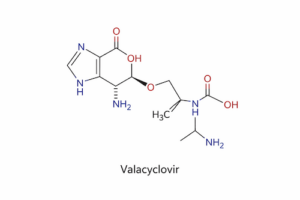
Valacyclovir is a synthetic nucleoside analogue antiviral that converts to acyclovir in the body. It blocks viral DNA polymerase to stop herpes simplex virus and varicella-zoster virus replication. Used for genital herpes, cold sores, and shingles treatment and suppression.
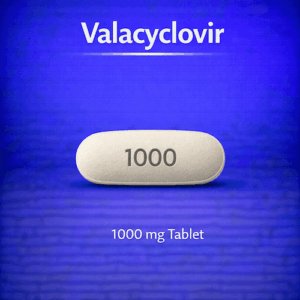
Valacyclovir HCl Tablets
Valacyclovir is a synthetic antiviral in the nucleoside analogue drug class. After absorption, the body converts it into acyclovir, which carries out the actual antiviral activity at the cellular level. Valacyclovir treats conditions caused by herpes simplex virus and varicella-zoster virus. It is one of the most widely used oral antivirals for these infections.
How Does Valacyclovir Work?
After absorption, valacyclovir is converted to acyclovir by enzymes in the intestinal wall and liver. Acyclovir then enters virus-infected cells. Inside those cells, it is phosphorylated — first by a virus-specific enzyme called thymidine kinase, then by cellular enzymes — into its active triphosphate form. This active form blocks DNA polymerase. That is the enzyme herpes viruses use to copy their genetic material.
The blocking is highly selective. Viral thymidine kinase activates the compound far more efficiently than human cellular enzymes do. This is why the compound targets infected cells without disrupting healthy cell DNA replication.
Viral replication slows and stops. The virus cannot spread to new cells at the same rate. This shortens outbreak duration and reduces transmission risk.
Valacyclovir does not eliminate latent virus. It controls active replication.
What Conditions Does Valacyclovir Treat?
Valacyclovir HCl tablets are used for several herpesvirus infections. Approved uses include genital herpes, cold sores caused by herpes simplex virus type 1, herpes zoster (shingles), and chickenpox in certain patient populations.
For genital herpes, the compound treats acute outbreaks and works as ongoing suppressive therapy to reduce how often outbreaks happen. Suppressive use also lowers the risk of passing the virus to sexual partners. This makes it relevant in HIV care settings, where immune-compromised patients face greater risks from herpesvirus co-infection. Valacyclovir is a standard part of HIV-associated infection management.
For herpes zoster, the compound reduces lesion healing time and the severity of acute nerve pain when started early. Earlier initiation produces better outcomes.
Cold sore treatment focuses on shortening the outbreak. The compound is taken at the first sign of a lesion.
Valacyclovir vs Other Compounds in the Same Class
Three nucleoside analogues dominate herpesvirus treatment: valacyclovir, acyclovir, and famciclovir. Each converts to an active form inside infected cells. They differ in how efficiently the body absorbs them.
Acyclovir has poor oral absorption — roughly 10 to 20 percent of a dose reaches the bloodstream. Valacyclovir was developed to solve that problem. Its valyl ester structure allows faster uptake in the intestinal wall, giving it bioavailability of around 55 percent. That higher absorption means lower and less frequent dosing compared to oral acyclovir. It is effectively an improved delivery mechanism for the same active compound.
Famciclovir converts to penciclovir inside infected cells rather than to acyclovir. The mechanism is similar — blocking viral DNA polymerase — but penciclovir stays active inside cells for longer than acyclovir triphosphate does. In practical terms, famciclovir dosing intervals for herpes zoster are comparable to valacyclovir. Tolerability across all three compounds is broadly similar.
Resistance is uncommon in immunocompetent patients for all three. In immunocompromised patients, resistance mutations in viral thymidine kinase reduce the effectiveness of both valacyclovir and famciclovir. Both depend on that enzyme for initial activation.
Valacyclovir remains the most prescribed of the three for genital herpes suppression.
Available Forms: Brand Names and Generic Valacyclovir
Valacyclovir HCl tablets are available under the brand name Valtrex, manufactured by GlaxoSmithKline. Generic valacyclovir is produced by many manufactuerers and other manufacturers across multiple markets. Generic availability has brought valacyclovir price down considerably from the brand period. This makes long-term suppressive therapy more accessible for patients.
The compound comes as oral tablets in 500 mg and 1000 mg strengths. Generic valacyclovir cost is considerably lower than branded Valtrex for equivalent strengths and pack sizes. This matters for patients on ongoing suppressive regimens where monthly supply is a recurring expense. Get HIV Treatment carries valacyclovir HCl tablets for patients who order through the site.
Side Effect
Valacyclovir is quite suited. Headache and nausea are the most commonly reported effects. These are typically mild and tend to resolve on their own.
Renal function is the most clinically significant area of concern. Acyclovir, the active form, is cleared primarily through the kidneys. High concentrations can cause crystalline deposits in renal tubules. This effect is dose-dependent and more likely in patients with reduced kidney function or low fluid intake. At the serious end of the spectrum, this can cause reversible acute kidney injury.
Neurological effects — including confusion, agitation, and in rare cases seizures — have been associated with high doses or impaired renal clearance. These effects are reported more often in elderly patients and those with existing renal problems. This is linked directly to the pharmacology of renal clearance, not a rare unpredictable reaction.
Thrombotic thrombocytopenic purpura and hemolytic uremic syndrome have been reported in severely immunocompromised patients at high doses. These are serious events. This association is documented specifically in HIV-positive and transplant populations.
Gastrointestinal effects — nausea, vomiting, abdominal discomfort — are more common at the higher doses used for herpes zoster than at the lower doses used for cold sores.
Drug Interactions
The most relevant interactions involve compounds that affect renal clearance. Nephrotoxic agents — including non-steroidal anti-inflammatory drugs, certain antibiotics such as aminoglycosides, and other antivirals including tenofovir — can reduce kidney clearance of acyclovir when used at the same time. The interaction adds renal burden rather than creating a direct metabolic conflict.
Cimetidine and probenecid both reduce renal tubular secretion of acyclovir. This slows clearance and can raise plasma concentrations of the active compound. The interaction matters when either compound is used at full therapeutic doses alongside valacyclovir.
Valacyclovir does not significantly inhibit cytochrome P450 liver enzymes. The risk of metabolic interactions with drugs processed through those pathways is low. This is a meaningful difference from some other antivirals used in HIV care, which carry extensive cytochrome P450 interaction profiles.
Mycophenolate mofetil, used in transplant patients, competes with acyclovir for renal tubular secretion. Both compounds can accumulate when given together, especially in patients with any degree of renal impairment.
One thing worth flagging: patients switching from acyclovir to valacyclovir sometimes assume the switch is dose-equivalent by weight. It is not. Valacyclovir delivers significantly higher acyclovir exposure from a smaller tablet dose. That is the entire point of the structural modification.
Related Pages on Get HIV Treatment
Genital herpes and herpesvirus infections in the context of HIV co-infection are covered in the condition section of this site. That page covers the broader management picture and how herpes simplex virus interacts with HIV progression.
For specific product pages covering branded and generic forms, see the Valtrex product page for the GlaxoSmithKline brand and the generic valacyclovir product page for non-branded options. Pricing, pack sizes, and ordering details for each are listed on those pages.
Speak to a qualified medical professional before making decisions about individual treatment.